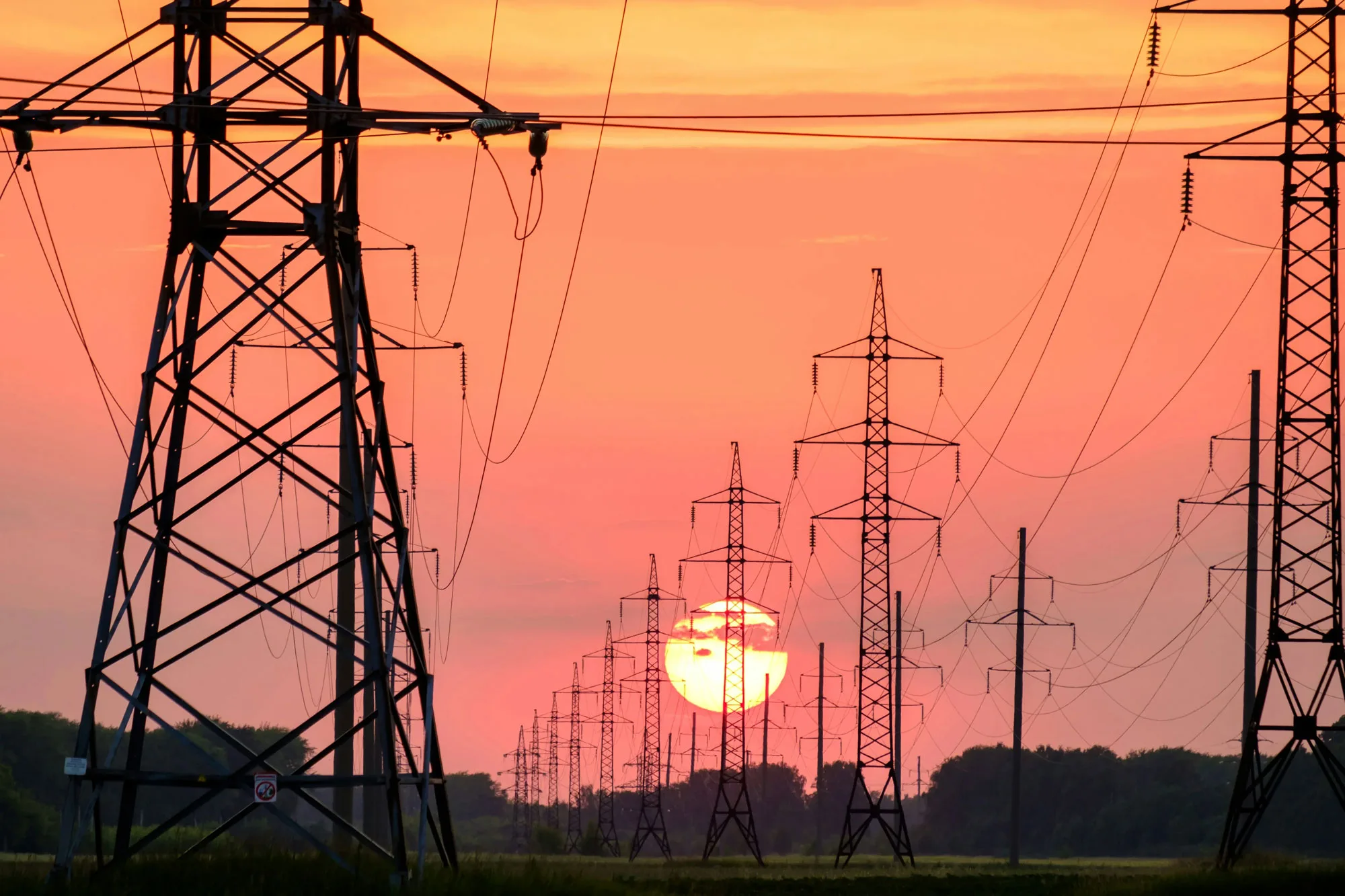
Australia generates an extraordinary amount of renewable energy. Wind farms turn across the Southern Tablelands. Solar arrays spread across inland New South Wales. Pumped hydro projects like Kidston in Far North Queensland are coming online, storing energy in old gold mines repurposed for a new era. On a good day, renewables already supply close to half of the electricity in the National Electricity Market.
And yet, for all of that generation capacity, the electricity still has to get somewhere. That is the challenge Australia has not yet solved.
The Australian Energy Market Operator’s draft 2026 Integrated System Plan describes a grid that needs to triple its total generation and storage capacity by 2050, from the current 92 gigawatts to 297 gigawatts. Meeting that demand requires not just more solar panels and wind turbines, but thousands of kilometres of new high-voltage transmission lines connecting remote generation sites to the cities and industries that consume the power. AEMO currently estimates around 6,000 kilometres of new transmission infrastructure will be needed by mid-century, with the most urgent work required this decade.
The generation is arriving. The transmission is not keeping up.
The infrastructure gap
Australia’s renewable energy resources are not conveniently located near its population centres. That has always been part of the country’s energy story, but it becomes a defining challenge during a transition of this scale. Renewable Energy Zones (designated areas of high wind and solar potential earmarked for concentrated infrastructure investment) have been declared across New South Wales, Victoria, Queensland, and Western Australia. Getting their output onto the national grid requires new corridors of high-voltage transmission that often cross hundreds of kilometres of agricultural land, remote terrain, and bushfire-prone country.
Since 2020, only around 490 kilometres of new transmission lines have been built, with approximately 2,090 kilometres in the pipeline. Progress has been slower than planned, constrained by planning approvals, supply chain pressures, community opposition, and the complexity of building critical infrastructure in remote and difficult environments. EY’s Net Zero Centre has noted that almost all transmission projects have experienced delays, with some running more than five years behind schedule.
AEMO’s chief executive Daniel Westerman put the stakes plainly when releasing the draft plan: slower progress will erode benefits to consumers and present real risks to system reliability. Australia cannot afford to generate clean energy it cannot deliver.
What the National Renewable Network actually needs
The National Renewable Network is the framework through which Australia is attempting to co-ordinate this buildout, connecting the country’s Renewable Energy Zones to population centres and industrial users through a series of high-capacity transmission corridors. It is, in effect, the circulatory system of the energy transition. Without it, even the most ambitious generation targets become stranded assets.
The infrastructure required operates at high voltages, typically 275kV, 330kV or 500kV, where the structural demands on transmission poles and towers are significant. These lines must carry heavy conductor bundles over long spans, often through environments that test the limits of materials and engineering. Remote solar farms in inland NSW. Wind corridors across the Victorian ranges. Substation connections in the Pilbara. Each project carries its own environmental, logistical, and structural challenges.
The government’s Rewiring the Nation program is committing substantial capital to accelerate this work: more than $4.7 billion for NSW transmission projects alone, $3.8 billion in finance committed to Marinus Link connecting Tasmania to the mainland, and up to $3 billion for Western Australian grid modernisation. The $5.5 billion Central West Orana REZ Transmission project in NSW, the first competitively-sourced REZ transmission project in the country, reached financial close in April 2025, and will add 240 kilometres of new high-voltage line to the network.
These projects are moving. But the scale of what is required means that every engineering decision, including the choice of structures to carry those lines, has long-term consequences for the network’s reliability and resilience.
Why the choice of transmission structure matters
Transmission poles for renewable energy zones operate in a different environment from suburban distribution poles. They need to manage significantly greater mechanical loads across extended spans, often in areas with extreme wind, fire risk, or corrosive coastal or industrial atmospheres. The structures are expected to remain in service for many decades, in some cases outlasting the generation assets they were built to serve.
Galvanised steel poles have become the standard for high-voltage transmission in Australia’s renewable energy buildout for reasons that are both practical and economic. Their high strength-to-weight ratio allows for longer spans between structures, which reduces the total number of poles required across a project site and minimises the land access and negotiation required from landowners, one of the acknowledged bottlenecks in the current transmission rollout. Unlike timber, they are non-combustible, which matters enormously in the fire-prone corridors where much of Australia’s new transmission infrastructure will be built. And unlike lattice towers, steel poles arrive ready for erection, with installation times that can help projects meet the urgent delivery timelines the energy transition demands.
IUP has supplied steel transmission structures across a range of renewable projects in Australia — including 330kV base-plate mounted poles for the Wellington North Solar Farm in the Orana region of NSW, and 275kV structures for the Kidston Pumped Storage Hydro project in Far North Queensland. These projects are part of the same national effort: building the physical infrastructure through which Australia’s clean energy future will flow.
The pace problem
Generating the political will and financial commitment for the energy transition has taken years. The harder challenge, and the one that is now most urgent, is building fast enough. Infrastructure Australia’s 2025 Market Capacity Report estimates the unconstrained pipeline of energy infrastructure at $163 billion over five years. But unconstrained pipelines and delivered infrastructure are different things, and the gap between them is where the transition currently lives.
The structural and supply chain challenges are real. The regulatory and community engagement challenges are equally real. AEMO’s revised forecasts reflect some adaptation to those realities: the growing role of batteries as a buffer for slower transmission development, and a greater emphasis on solar over wind because it is simpler and faster to build and connect. But none of that removes the need for the poles and wires.
Australia has the generation resources to run a renewable grid. It has the financial commitments to build the network. The question is whether the physical infrastructure, the kilometres of steel and conductor that carry power from where it is made to where it is needed, can be delivered at the pace the transition requires.
For the engineers, project developers, and procurement teams working on that challenge, the answer comes down, ultimately, to structures in the ground.
Working on a renewable energy transmission project? IUP manufactures high-quality steel utility poles and substation structures engineered for Australia’s most demanding energy infrastructure. Get in touch with the IUP team to discuss your project requirements.