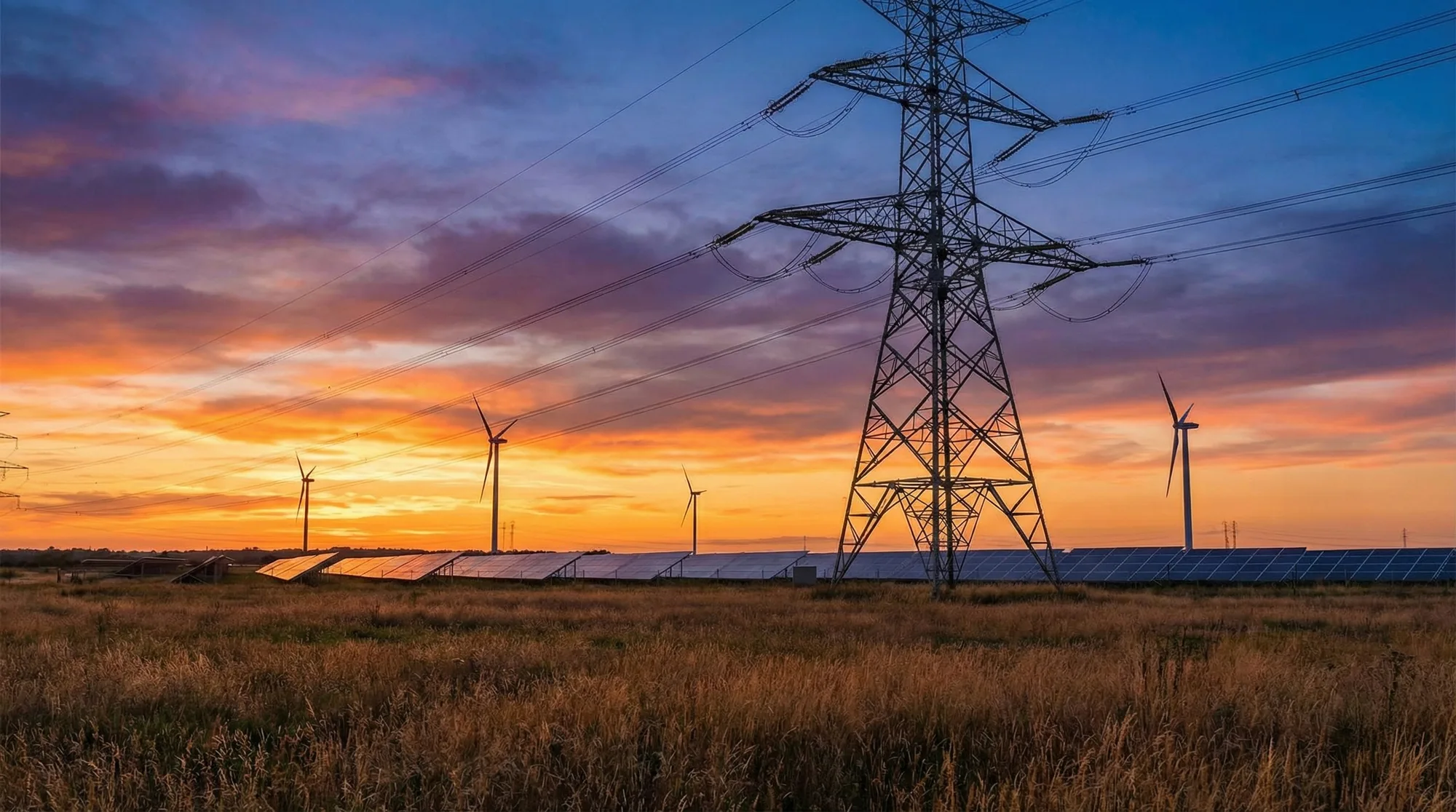
As Australia aggressively pursues its federal commitment to Net Zero by 2050, the rapid expansion of the National Renewable Network requires massive civil engineering upgrades. Connecting large-scale wind and solar assets to the grid requires thousands of kilometres of new high-voltage transmission lines, often through some of the country’s most challenging terrain.
For these high-capacity corridors, the choice of support structure is a defining factor in project viability. Modern clean energy infrastructure demands a level of structural reliability and rapid deployment that traditional methods often struggle to meet.
How Do You Engineer Transmission Poles for Renewable Energy Zones?
Transmission poles used in renewable energy zones (REZ) must manage immense mechanical loads while maintaining strict safety clearances. Unlike standard distribution poles, these structures are engineered to support heavier conductor bundles over extended spans.
According to Infrastructure Australia, the sheer scale of the required grid upgrades will necessitate over one million tonnes of steel in the coming decade. At IUP, we manufacture steel poles to meet this exact demand, utilising base plate mounted designs that allow for precision installation even in the remote locations common to renewable energy projects. This engineered approach ensures that power transmission remains uninterrupted, even under the extreme wind conditions of open solar and wind farms.
What Are the Advantages of Steel Poles Over Lattice Towers for Clean Energy?
When developing clean energy transmission, project managers prioritize materials that offer predictable performance and low maintenance overheads. Galvanised steel poles offer three distinct strategic advantages over legacy lattice structures:
- Minimised Land Footprint: The high strength-to-weight ratio of steel allows for taller transmission poles and longer spans. This reduces the total number of structures required across the landscape, which is a key consideration for both environmental impact and landowner negotiations.
- Rapid Grid Integration: Unlike lattice towers, which require intensive on-site assembly, tapered steel poles arrive ready for immediate erection. This significantly accelerates the deployment phase of overhead power lines, helping projects meet the urgent timelines of the national energy transition.
- Fire and Climate Resilience: As highlighted by the Australian Energy Regulator (AER), non-combustible assets are vital for network security in high-bushfire-risk areas. Steel structures provide the necessary resilience to keep the National Renewable Network operational during extreme weather events.
What is the IUP Engineering Verdict for High-Voltage Transmission?
The success of the Australian energy transition depends entirely on the resilience of the physical structures that carry it. While legacy power poles served the distribution needs of the past, the high-voltage demands of the future require the engineered precision and lifecycle durability of galvanised steel. By focusing on high-performance transmission and distribution solutions, we help ensure that the renewable energy projects of today become the permanent energy foundations of tomorrow.
Looking for Technical Data?
- Access the IUP Technical Resources for our full suite of pole assembly and installation guides.
- View our specifications for Base Plate Mounted Poles, specifically engineered for clean energy infrastructure.
Request a Custom Structural Analysis If you are designing for a major REZ or a National Renewable Network expansion, our team can provide the full PLS-Pole datasets and structural verification required for your power transmission assets.