As Australia’s energy sector undergoes a generational shift—driven by the development of massive Renewable Energy Zones (REZ) and a federal commitment to Net Zero by 2050—the selection of power distribution and transmission poles has transitioned from a matter of procurement to one of long-term economic strategy. For engineers and asset managers, the debate between traditional timber, galvanised steel, and modern composites is no longer just about the upfront cost of a single unit. Instead, it is a complex calculation of Total Cost of Ownership (TCO), network reliability, and climate resilience.
Historically, the Australian grid was built on high-durability hardwoods like Jarrah and Spotted Gum. However, as the climate changes and the “biological clock” of the existing pole population runs down, the limitations of timber are becoming a significant operational liability. In response, engineered alternatives like steel and Fiber Reinforced Polymer (FRP) composites have emerged, each offering a distinct profile of benefits and trade-offs for distribution, transmission, and lighting networks.
Comparing Service Life and Material Predictability
The fundamental difference between these materials lies in their predictability. Timber is a natural product; its performance is dictated by the specific growth conditions of the tree and its subsequent susceptibility to rot and termites. According to the Western Australian Government’s guidelines on private power poles, hardwood poles are expected to last between 25 and 40 years, yet internal deterioration is notoriously difficult to detect without invasive testing.
In contrast, galvanised steel poles are manufactured products with uniform material properties. Engineered in accordance with AS/NZS 7000 and ASCE/SEI 48, these steel structures offer a service life often exceeding 80 to 100 years. Steel does not rot, shrink, or warp, ensuring that hardware tension and line clearances on distribution and transmission lines remain consistent over decades. While composite (FRP) poles also offer immunity to biological decay and corrosion, they introduce different variables, such as potential UV degradation over long periods, though modern coatings have mitigated much of this risk.
Managing Maintenance Cycles and Operational Costs
The true cost of a utility pole is realized in its maintenance cycle. For a network operator, the “set and forget” nature of an asset is the gold standard for reducing operational expenditure (OpEx).
- Timber Poles: Require a rigorous inspection regime. In most Australian jurisdictions, state regulators like Energy Safe Victoria (ESV) mandate inspections every 3 to 5 years. If decay is found, poles must be reinforced with steel stakes—a temporary measure that adds cost while the timber continues to degrade.
- Steel Poles: Maintenance is primarily limited to visual inspections for coating integrity. Hot-dip galvanizing provides a sacrificial layer that protects the structural core of lighting columns and power poles even in corrosive environments.
- Composite Poles: Offer the lowest maintenance requirement due to their inert nature. They are non-conductive and immune to the “ground-line” corrosion that can affect steel in specific soil types. However, as noted in recent Essential Energy regulatory proposals, the higher initial capital cost of composites must be weighed against these long-term savings.
Improving Bushfire Resilience in High-Risk Areas
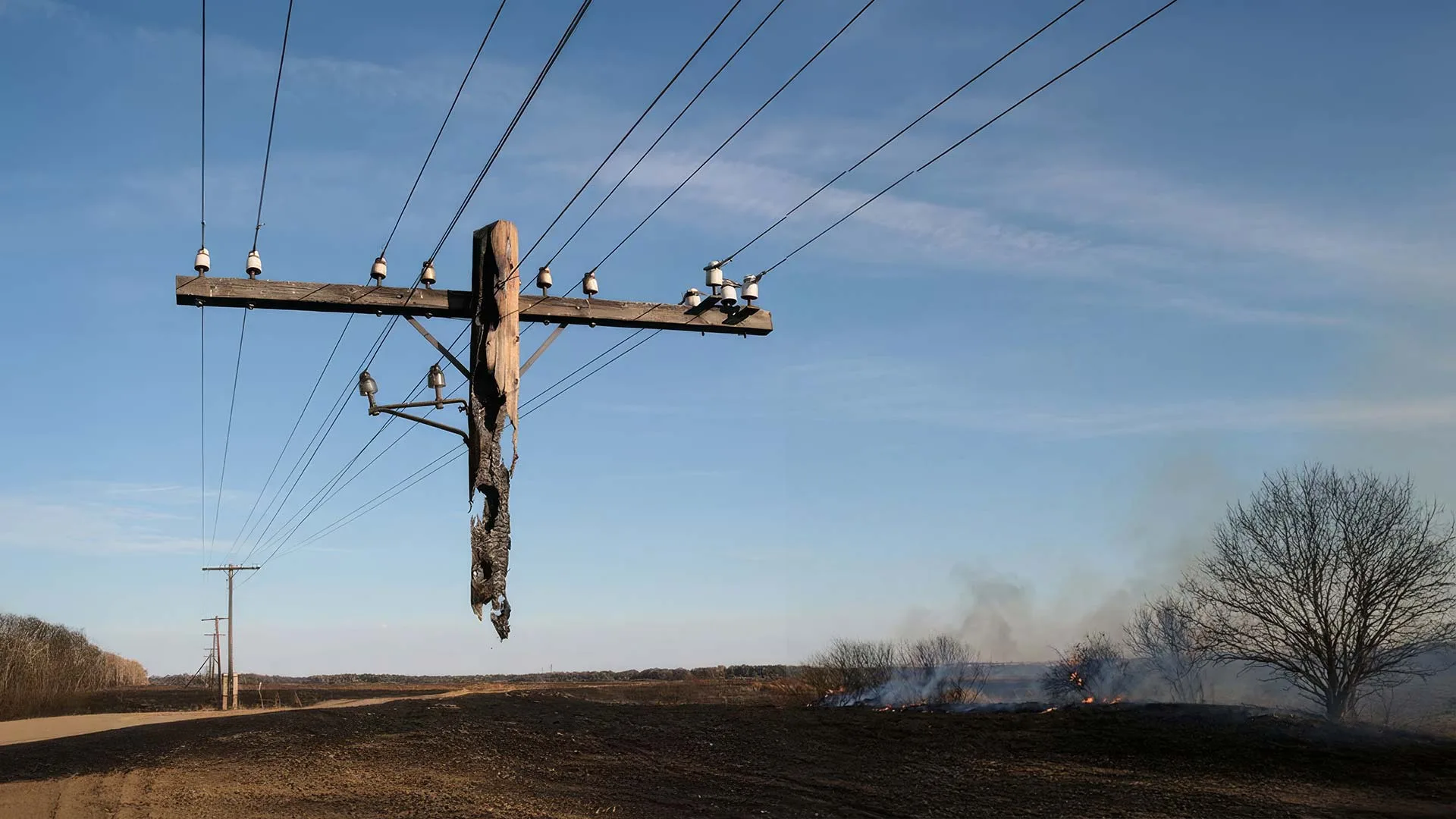
In Australia, bushfire resilience for power distribution and transmission is no longer an optional feature; it is a regulatory requirement. The Australian Energy Regulator (AER) has observed a growing trend among distributors to proactively replace timber assets in High Bushfire Risk Areas (HBRA).
Timber poles are combustible; a fire front can burn through the base, leading to collapsed lines that pose immediate safety risks and prolong power outages. Steel and composite poles are non-combustible. While composites can suffer structural damage at extreme temperatures, they typically remain standing, allowing for much faster restoration of power and lighting services. Steel remains the most robust in this category, retaining a higher percentage of its structural integrity under thermal stress, which is critical for high-voltage transmission lines where failure is not an option.
Sustainability and Environmental Impact of Pole Materials
While timber remains the cheapest material to purchase initially, it is often the most expensive to dispose of. Most modern timber poles are treated with preservatives like Copper Chrome Arsenate (CCA) or creosote. At the end of their life, these are classified as hazardous waste, as outlined by EPA Victoria. Disposal costs for tens of thousands of retired timber poles represent a significant, often overlooked, financial and environmental liability.
Steel, by contrast, is a pillar of the circular economy. It is 100% recyclable at the end of its 80-year life. Composite poles, while durable, are currently more difficult to recycle, as the resin-fiber bond is challenging to break down into reusable components—a factor that asset managers must consider under modern Environmental, Social, and Governance (ESG) reporting frameworks.
The IUP Engineering Verdict
Selecting the right pole material requires balancing technical requirements with long-term asset security. While timber remains a legacy baseline for low-load rural distribution, its increasing maintenance burden and vulnerability to fire make it a high-risk choice for modern grids. Similarly, while composites provide excellent non-conductivity in specific niche applications, their high upfront cost and complex end-of-life disposal remain significant considerations.
For major transmission and lighting projects that demand the highest levels of structural capacity and public safety, galvanised steel remains the industry standard. Its unmatched engineering predictability and superior performance under thermal stress ensure that critical infrastructure remains standing when it is needed most. From an investment perspective, the longevity and 100% recyclability of steel provide a level of security and sustainability that alternative materials simply cannot match.
Looking for Technical Data?
- Access the IUP Technical Resources for our full suite of pole assembly and installation guides.
- View our specifications for Base Plate Mounted Poles, engineered for Australian transmission and distribution standards.
Request a Custom Structural Analysis If you are designing for a Renewable Energy Zone or a high-risk bushfire environment, our engineering team can provide full PLS-Pole datasets and custom structural verification for your utility and lighting poles.